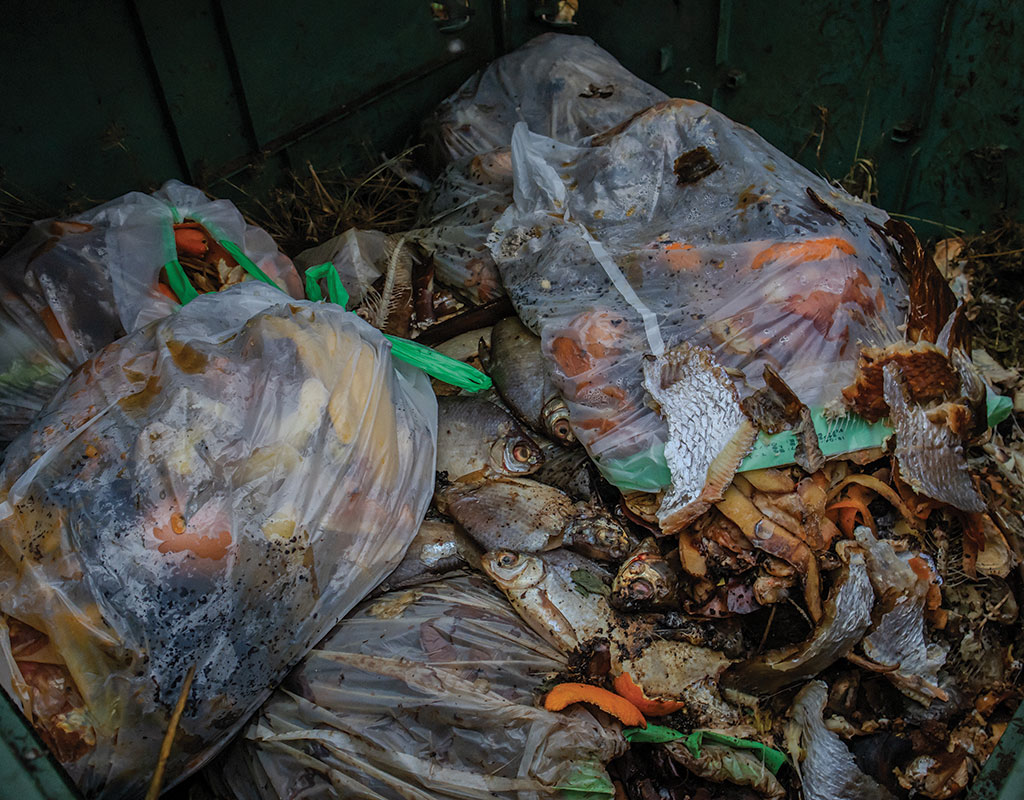

How many unopened milk cartons end up in the trash each day? How many untouched apples, uneaten sandwiches, and discarded vegetable servings fill school dumpsters across New Jersey? The answers may surprise you, and they are inspiring a growing movement in schools to rethink how food is served, shared and saved.
Across New Jersey, school districts are beginning to tackle one of the most overlooked sustainability challenges in their schools: food waste. In the process, they are saving money, reducing their environmental impact, supporting food insecure families and empowering students to lead the charge. With help from Sustainable Jersey for Schools and the support of passionate educators, food service staff and engaged students in the Waste Warriors Club, schools like those in Clinton Township School District are proving that change can start with a single lunch tray.
The Waste We Don’t See
In 2018, New Jersey generated 23 million tons of solid waste and 22% of that was food waste, according to the New Jersey Department of Environmental Protection (DEP) Environmental Trends Report. That’s over five million tons of food, much of it still edible, thrown away in homes, businesses and schools across the state.
A pilot study conducted by Sustainable Jersey and Rutgers Cooperative Extension measured lunchroom food waste at three New Jersey schools: Halsted Middle School in Newton, Delran Middle School in Delran and George L. Catrambone School in Long Branch. On average, each school discarded 115 pounds of food per day—adding up to more than 20,000 pounds annually. This not only represents a significant waste of resources, but also a financial burden for schools that must pay for disposal. Reducing food waste can help districts lower these costs while promoting smarter, more sustainable practices such as food redistribution, donations and composting.
Nationwide, the scale of food waste is even more staggering. The United States Department of Agriculture (USDA) estimates that 30 to 40% of the United State food supply is wasted every year, making it the single largest component of landfills. As food decomposes, it releases methane, a potent greenhouse gas that accelerates climate change.
Beyond the environmental impact, food waste raises concerns about fair access to food and support for those in need. The World Wildlife Fund’s Food Waste Warriors Report estimates that schools in the United States spend about $1.7 billion each year on food that is never eaten. At the same time, the USDA Economic Research Service reports that more than 47 million Americans lived in food-insecure households in 2023, many of them children. Redirecting just a portion of this wasted food could make a real difference in families’ lives.
The benefits of reducing food waste are wide-ranging. It keeps waste from landfills and incinerators, helping to curb pollution. Socially, food recovery can help alleviate hunger and strengthen local economies. And in schools, these efforts come full circle—educating students, fostering environmental responsibility and building healthier communities.
A District-Wide Strategy: Round Valley School Leads the Way
At Round Valley Elementary School in the Clinton Township School District, food waste reduction has become a student-led movement with district-wide impact. With guidance from Sustainable Jersey for Schools, dedicated educators and the Clinton Township District Green Team, two schools launched ambitious initiatives to audit food waste, improve waste systems, and foster a culture of sustainability.
It all began with a simple question from students in Round Valley School’s newly formed Waste Warriors Club: “Where is all this food going?” The answer? Straight into the trash, but not for long.
Armed with clipboards and curiosity, the Waste Warriors conducted their first cafeteria waste audit in winter 2024. They sorted and weighed all food discarded during lunch, everything from unopened yogurt cups to untouched vegetables. What they found surprised them. A significant amount of perfectly good food was thrown away every day.
In just one day, they measured over 200 pounds of total cafeteria waste. Thirty pounds of spaghetti and pizza were discarded, along with uneaten apples and oranges. These findings galvanized the students and their teachers.
Ronda Ferri, Round Valley School Dean of Student Supports and a third-grade special education teacher, first got involved when she was named “goal champion” for fiscal responsibility and sustainability during the district’s strategic planning process. She joined forces with the Caroline Mann, also a special educator at Round Valley School and the Clinton Township School District Green Team Leader. Together they began working on Sustainable Jersey for Schools actions for Round Valley School. They started with the students in their classes, who formed the first Waste Warriors group.
After the initial waste audit, a broader group of Waste Warriors was selected from student volunteers. Meeting weekly, they explored the causes and consequences of food waste. They deepened their understanding of food systems and sustainability—and became catalysts for change.
Building a Movement: From Classrooms to the Community
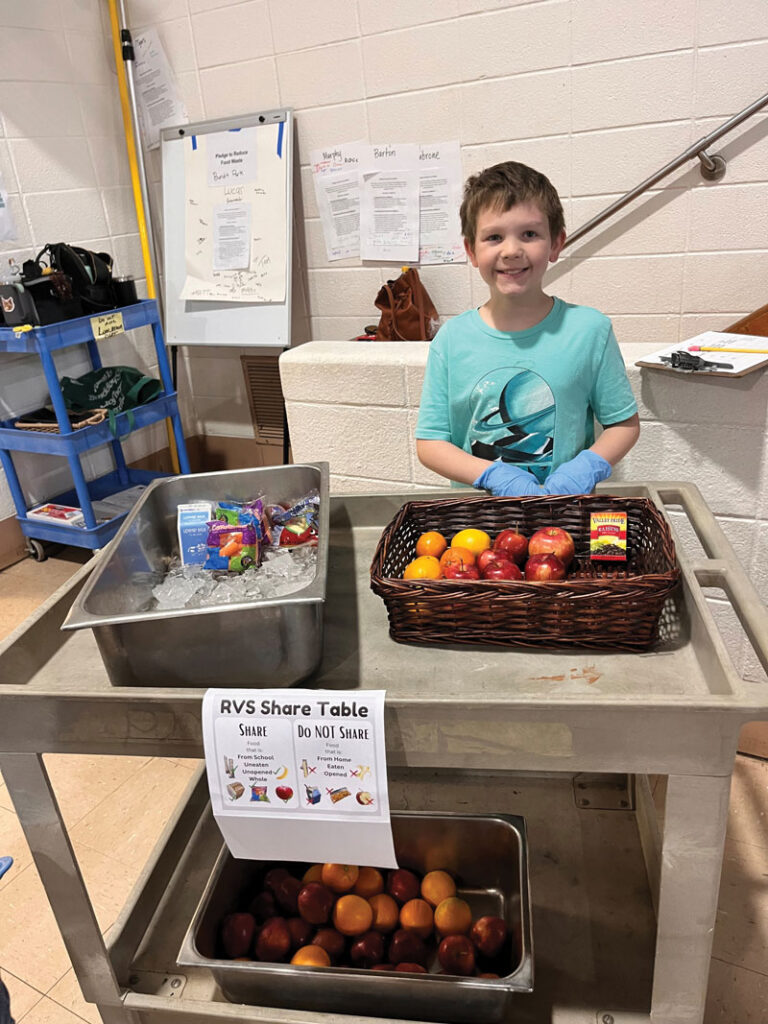
The Waste Warriors did not stop in the cafeteria. They brought their message into classrooms, teaching peers about food waste and sustainability. They promoted saving and sharing unopened items through the school’s share table, creating visual materials and lunchtime public service announcements to raise awareness. They even analyzed data from their second cafeteria waste audit to identify new opportunities for waste reduction.
Changing Systems, One Meal at a Time
Student leadership sparked the transformation, but long-term success required broader systems change. Food service and custodial staff received a training to clarify what items could go on the share table and explore small changes with big impact, like offering whole fruits or switching from hot to cold vegetables. These adjustments will make it easier for students to save or share food rather than waste it.
“When I approached the lunchroom and custodian staff, one of the lunch aides was immediately excited by the idea and helped rally the rest of the team,” said Ferri. “Since the cafeteria is such a busy place, it was essential that we all understand and support the goals so we could work together.”
Staff also began encouraging students to select fruits or vegetables they would eat or at least choose items that could be shared later. The school principal is now considering a recess-before-lunch schedule, which, a study in the American Journal of Preventive Medicine shows, increases consumption of fruits and vegetables. To support the share table, signage was added to clarify what foods were eligible. A recycling bin was introduced to separate packaging from general waste. The school even embraced composting food scraps.
Lasting Impact
“The kids were enthusiastic, took ownership, and became leaders,” said Ferri. “It opened their eyes to the importance of sustainability. As citizens of the earth, they understand these are skills they’ll need beyond the classroom.” Interest in the program has since grown across the school. “Now everyone wants to be part of it,” Ferri said. “The students are even dividing up the Sustainable Jersey for Schools actions to make sure each group contributes.”
Students brought lessons home as well, discussing food waste with their families and some even starting to garden. “Many of them had never grown anything before. Now they know that saving seeds for next season is part of the process,” Ferri said. “They also really care about the chicks we raised in class. I’m still sending them video updates over the summer so they can see the chickens are doing well and laying eggs in their new home.”
Mann saw a particularly meaningful impact on her students identified with special needs. “Through participation in the Waste Warriors Club, they found belonging and purpose,” Mann said. “They used their math skills to analyze audit results and even gave speeches at our garden ribbon cutting. It’s been powerful to see them grow into leaders.”
“Our success is thanks to unwavering support from our administration, board of education and community partners,” Mann added. “We’re still relatively new to Sustainable Jersey for Schools, but strong collaboration has helped us move quickly and meaningfully.” Clinton Township is certified with Sustainable Jersey, the municipal certification program, and the green team has been working in partnership with the schools.
As the district Green Team leader, Mann was instrumental in Round Valley School achieving Sustainable Jersey for Schools certification in 2024. Round Valley was the first school in the district to be certified and now other schools in the district are submitting applications for the next round.
Patrick McGaheran Elementary School Joins In
Just a few miles down the road, students at Patrick McGaheran Elementary School also conducted a cafeteria waste audit and formed a Waste Warriors Club.
Like their peers at Round Valley, these students took their message schoolwide. They taught food waste lessons in homerooms, created educational posters and hosted outreach tables at the district science fair and community day. At each event, students, parents, and community members signed food waste reduction pledges, which were proudly displayed in the cafeteria.
Waste Warriors also delivered daily announcements and promoted use of the share table. Their efforts quickly paid off. By their second audit, cafeteria food waste had been cut in half. Nearly 40 pounds of food was shared rather than trashed, evidence that change was taking hold.
A Garden Grows
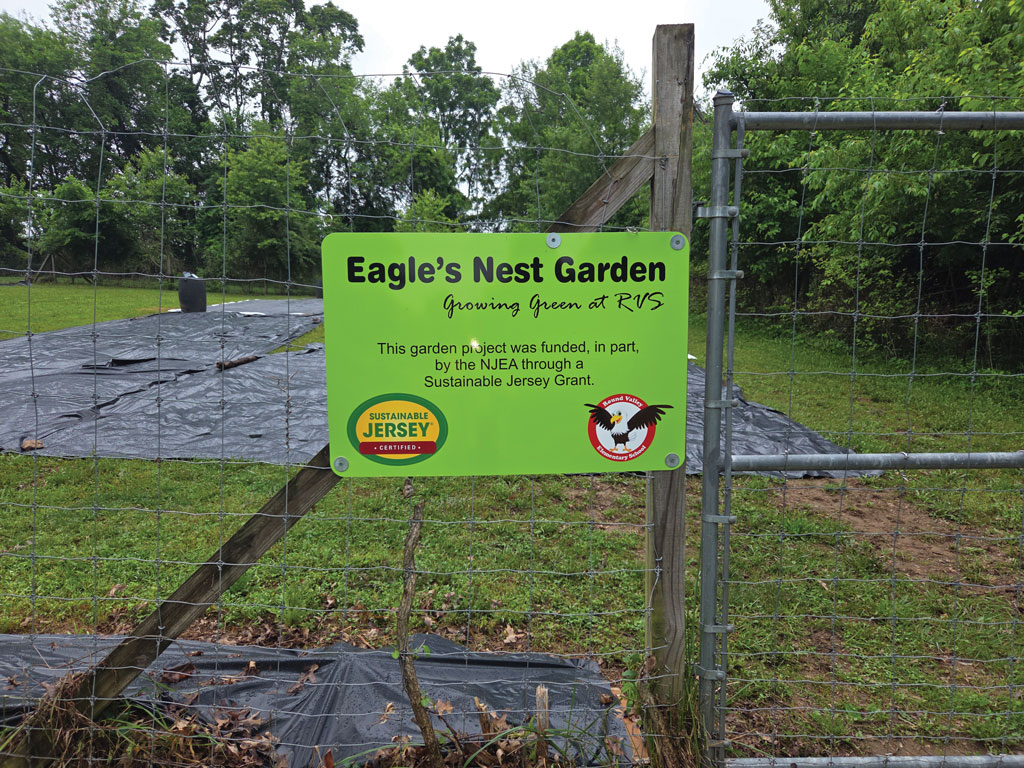
The district’s sustainability efforts are taking root. In June 2025, Round Valley School received a Sustainable Jersey for Schools grant to launch its “School Garden 2.0” project, a creative initiative that connects food waste reduction with composting, curriculum, and community engagement.
The project kicked off by reclaiming a long-neglected 30-by-30-foot garden plot on campus. Rather than hiring landscapers, the school took an eco-friendly approach: partnering with a local farm to bring in goats for sustainable land clearing. Students will build compost bins, track compost temperatures and use wheelbarrows to transport finished compost to nourish the garden beds. The effort will integrate science, literature and environmental studies into a hands-on learning experience. Key collaborators include Rutgers Cooperative Extension, the Clinton Township Environmental Commission, and the New Jersey Native Plant Society.
“This grant represents more than just funding for a garden,” said Carl Blanchard, Clinton Township School District’s Director of Curriculum, Learning, and Grants and a green team member. “It’s an investment in sustainable education, community welfare and environmental stewardship. It will allow us to create a living laboratory where our sustainability initiatives can converge and grow, delivering lasting benefits for our students and the broader community.”
Superintendent Dr. Melissa Stager added, “Our students learn best when they’re engaged and see that their work matters. Projects like this fully immerse students and staff in learning that stays with them well beyond their time in our schools.”
Together, the students at Clinton Township School District are proving that real change can start with a simple question—and grow into a movement. By leading waste audits, educating their peers, collaborating with staff and acting, these young Waste Warriors have helped their schools build a sustainable, student-driven food culture. Other districts may want to take note: the next generation of environmental leaders is already at work.
Why It Matters
Reducing food waste in schools is not just about shrinking the garbage pile. It is about changing mindsets, building healthier habits, and investing in the next generation of environmental stewards. When schools take a hard look at their waste stream, they uncover opportunities not just to save food, but to save money, reduce emissions, support students in need and deliver meaningful, interdisciplinary learning.
Food waste audits and recovery programs provide powerful real-world applications of what students learn in science, economics, and civics. These programs do not just teach—they transform. Students become advocates, teachers and problem-solvers. And the impact ripples outward, into homes, neighborhoods and communities.
Looking Forward
Food waste is a solvable problem and New Jersey schools are showing the way. The work happening in Clinton Township School District is a blueprint for what is possible when education, community and sustainability come together.
As more schools across the state and country recognize the importance of food waste reduction, they will find an ally in their students and a growing network of resources from Sustainable Jersey for Schools. Change starts with awareness, grows with action, and flourishes when students are given the chance to lead.
Resources Recap
Sustainable Jersey for Schools Grants & Technical Assistance Programs Sustainable Jersey for Schools connects participating schools and districts with the financial and technical support needed to implement sustainability initiatives and advance toward certification. Each year, the program offers competitive grants and technical assistance opportunities, made possible through the support of program underwriters and partner organizations. Currently open is the Sustainable Jersey for Schools Grants Cycle funded by NJEA: $180,000 to support grants to public schools and school districts. Applications are due by October 31, 2025. www.sustainablejerseyschools.com/grants
Reduce, Recover & Recycle Food Waste: A Sustainable Jersey Toolkit for PreK–12 Schools Developed by Sustainable Jersey and Rutgers Cooperative Extension, this comprehensive toolkit offers guidance, resources, and real-world examples to help schools reduce food waste, promote healthy eating, and address food insecurity. It covers a wide range of topics, including how to conduct waste audits; reduce and recycle organic waste and packaging; recover uneaten food; implement food service best practices; educate and engage students; run school-wide awareness campaigns; and integrate school gardens into food sustainability efforts. The toolkit also aligns each strategy with relevant Sustainable Jersey for Schools actions to support implementation. bit.ly/FoodWasteToolkit
Workshop 2025 Session: Reimagining the School Cafeteria to Reduce Food Waste Learn more about how Clinton Township schools leveraged Sustainable Jersey resources to cut food waste.
Session speakers: Lana Brennan, Clinton Township Board of Education president; Dr. Melissa Stager, superintendent, Clinton Township School District; Ronda Ferri, Clinton Township School District third grade special educator and dean of student supports; Caroline Mann, Clinton Township School District third and fourth grade special educator and District Green Team Leader; and Véronique Lambert, Sustainable Jersey for Schools program manager.
October 21, 2025: 10:30 am – 11:30 am | Room 309
Kristy Ranieri manages communications for Sustainable Jersey, a role she has served for 16 years since the program’s launch in 2009.